
About Course
Advances in robotics and artificial intelligence have accelerated the development of autonomous vehicles and unmanned systems. These technologies enable vehicles and robots to operate independently by recognizing their surroundings, determining their positions, planning movement paths, and making decisions to control their actions. Achieving these capabilities requires the integration of various technologies, including computer vision, deep learning, sensor systems, and motion-planning algorithms. Understanding these technologies is essential for developing robotic systems that can operate safely, efficiently, and adaptively in dynamic environments.
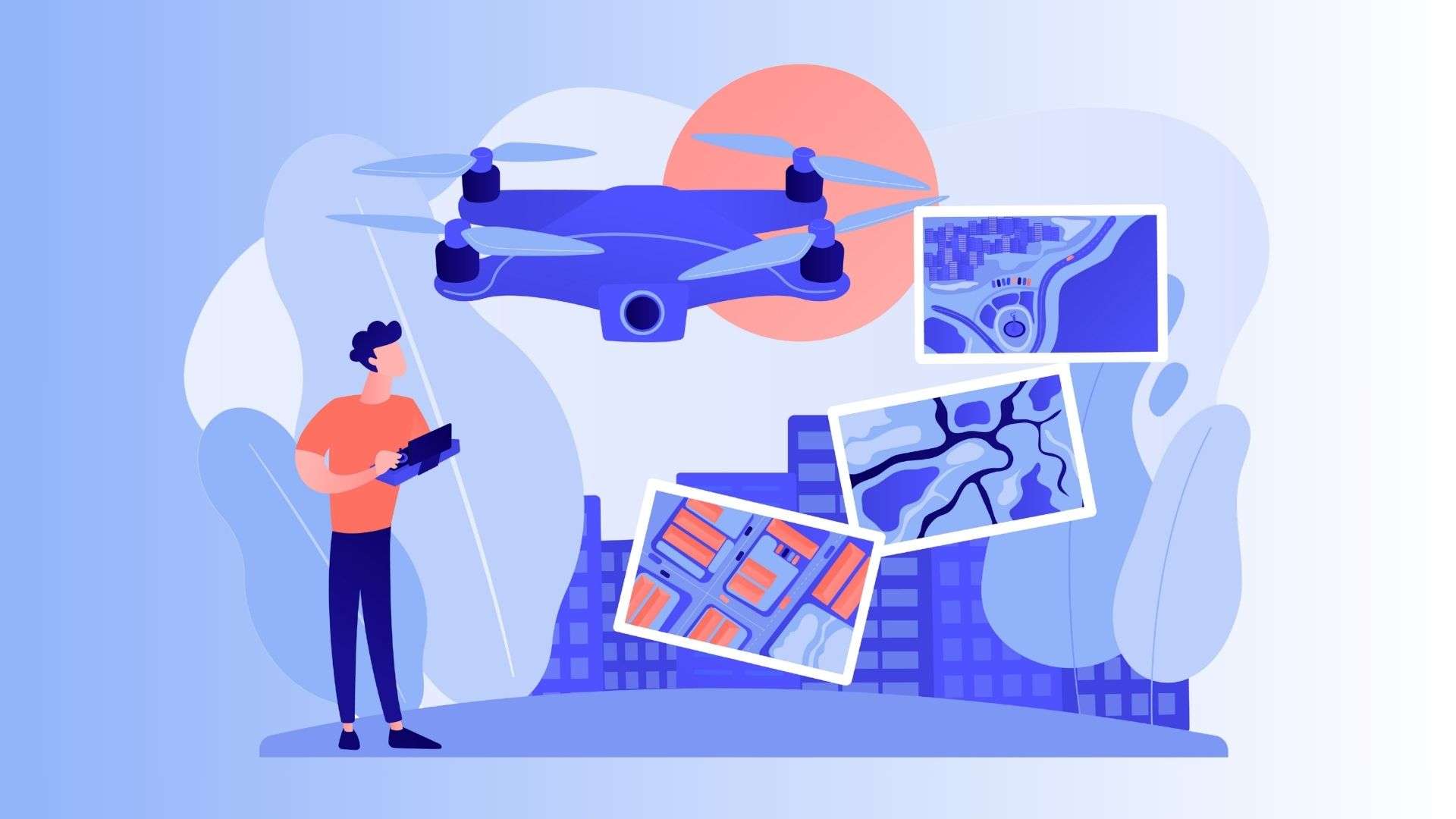
The Advanced Robotics: Autonomous Driving and Unmanned Aerial Vehicles course is designed to provide participants with an understanding of the technologies and computational approaches that support autonomous vehicles and unmanned systems. The course covers the application of Convolutional Neural Networks (CNNs) and multi-task models for environmental perception, Simultaneous Localization and Mapping (SLAM) for positioning and mapping, and Rapidly-exploring Random Trees (RRT) for path planning. It also explores end-to-end models that integrate sensor data processing and vehicle control within a single learning framework. Through this course, participants will develop an understanding of how different robotic subsystems work together and how these technologies are applied in autonomous systems.
This course explores the fundamental concepts, technologies, and algorithms used in the development of autonomous robotic systems. It begins with an introduction to autonomous driving vehicles, followed by the application of Convolutional Neural Networks (CNNs) for environmental perception and multi-task models that enable multiple visual perception tasks to be performed simultaneously. Participants will then learn about Simultaneous Localization and Mapping (SLAM) for estimating positions and constructing environmental maps, as well as Rapidly-exploring Random Trees (RRT) for planning movement paths while avoiding obstacles. The course concludes with an exploration of end-to-end models that directly connect raw sensor data to vehicle control actions through integrated perception and control. Designed for intermediate-level learners, this course provides foundational knowledge for understanding and developing autonomous driving technologies and unmanned robotic systems. Participants who complete all learning materials will receive a certificate of completion.
Course Content
Intro Autonomous Driving Vehicle
-
09:59
-
Introduction to Autonomous Driving
-
Kuis Otonom dan Sensor AV
Perception Conv Neural Nets
Perception Multi Task Model
SLAM
RRT Path Planning
End-to-End Model
Student Ratings & Reviews
